
Child care affordability is a crisis we can solve.

Child Care Providers United members gather before a rally at the California state Capitol.
Child care affordability is a crisis we can solve.

This fall’s election results made it clear: working people want elected leaders who will address the steep cost of living, the stagnation of workers’ wages and the financial squeeze on families. One big part of that squeeze is the cost of child care. Although costs vary by state, many families struggle to keep up, spending thousands of dollars each month on care. Here’s a sobering fact: infant care now costs more than college tuition.  

The pro-worker candidates who won in key races last month heard the message loud and clear – and offered solutions. Virginia Governor-elect Abigail Spanberger plans to tackle the crisis by increasing access to services, expanding early childhood career pathways and providing bonuses to enhance recruitment of providers where there are staffing shortages. New Jersey Governor-elect Mikie Sherrill plans to expand universal pre-K and increase training for providers. And New York City Mayor-elect Zohran Mamdani made universal child care for children up to 5 years old a pillar of his campaign. 

Finding solutions to the child care affordability crisis is an urgent public policy need. Recent estimates show that lack of child care access could cost the economy as much as $329 billion over the next decade in lost productivity, workforce shortages and decreased income and revenue. 

Costs are so high that many parents are leaving the workforce entirely to provide their own care. With fewer employees in the workforce, employers contribute less to payroll taxes. And with lower payroll taxes, there are fewer funds for public services. Whether you have children or not, we are all affected by this crisis.  

It is time for child care to be treated as essential public infrastructure. Child care is vital to our quality of life and the health and safety of our communities. A service so vital to our society demands investment for the public good.  

Providers need safe and suitable spaces, higher wages and educational pathways. Most importantly, they need a voice on the job. Unions are a powerful vehicle to achieve affordability for parents and a higher standard of living for providers. The national coalition Care Can’t Wait has a mission to demand investment and help elected officials see child care as public infrastructure. 
Image

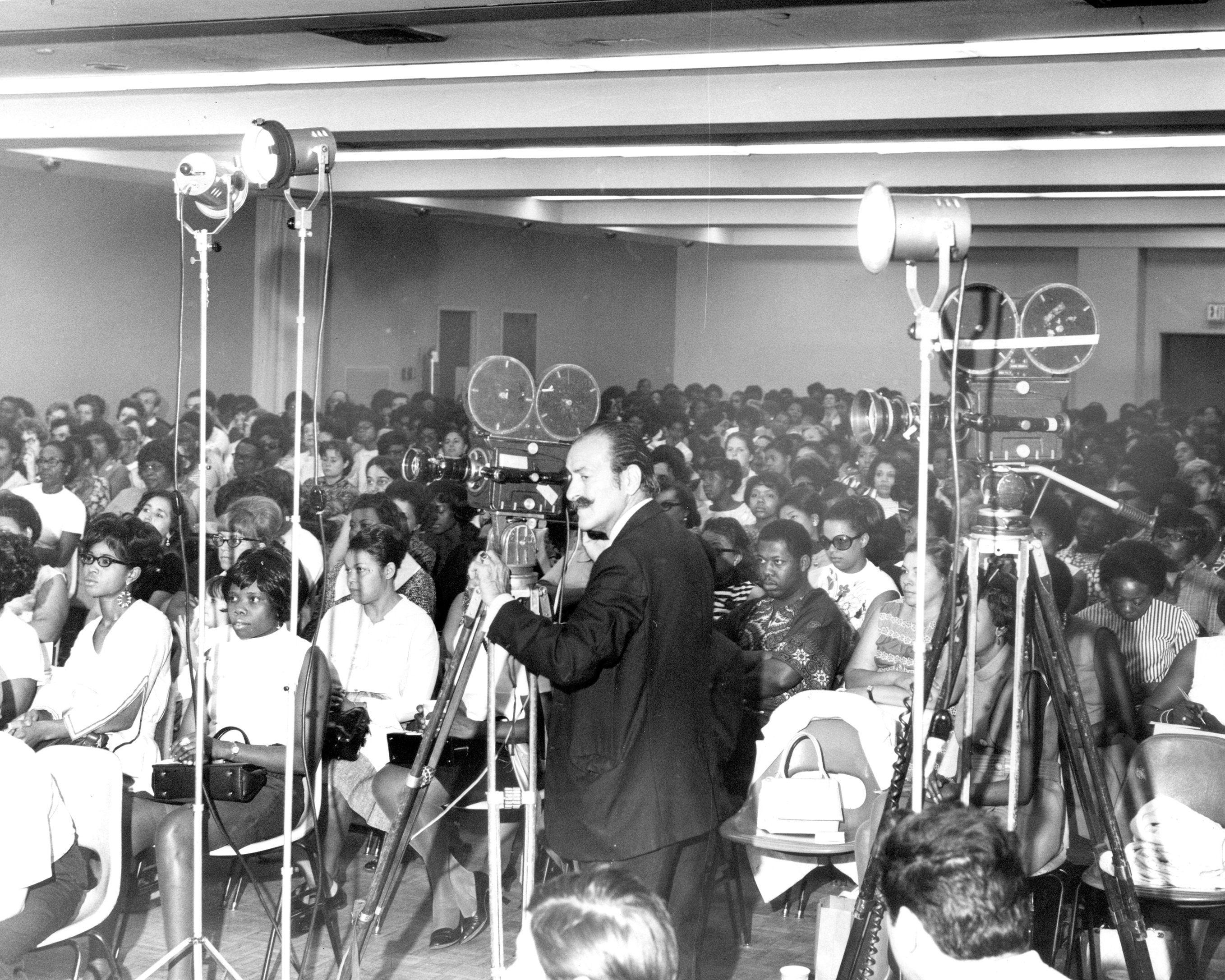
TV camera crews cover the Local 205 day care membership meeting at which the strike decision was made. Photographer: Henry Levy.

Providers have been standing up and organizing with our union for decades. In 1967, New York City day care providers became one of the first groups in the nation to organize, forming AFSCME Local 205. Nearly 1,000 providers at 79 facilities across the city gained a voice on the job to address salary inequities and low wages, health care and working conditions. Two years later, in September 1969, the fight for a fair contract led them to a 17-day strike. Their courage and solidarity won them a historic wage increase that mirrored the wage of city elementary school teachers. And soon after, the workers turned their contract victory into political power, and pushed the city to adopt a training program to upgrade the skills of child care providers. 

More recently, Child Care Providers United — which is made up of AFSCME Local 3930/UDW in coalition with SEIU and represents 60,000 providers in California — won their third contract. After a months-long contract campaign, they secured historic investments in caregiving infrastructure, including improved wages, health care coverage and funding for training and continuing education. For Pamela Rocha, a CCPU child care provider who is battling two life-threatening illnesses, a fair contract means keeping her health care while fighting cancer. Rocha explained, “I’m fighting because my life depends upon it — and because our kids are worth it.” 

We are making progress on the state and local levels. On Nov. 1, New Mexico became the first state to offer no-cost universal child care. Their program focuses on recruiting and licensing 5,000 additional registered home-based child care providers. It raises the reimbursement rates to reflect the true cost of care. The state created a $12.7 million fund to cover construction, expansion and renovation of child care facilities. The program is funded in part by the state’s interest from its Early Childhood Education and Care fund, which primarily comes from oil and gas taxes. Another bright spot is Connecticut, which passed a bill this year making child care free for families earning under $100,000 per year and no more than 7% of income for those earning more.  

We cannot solve the affordability crisis without investing in children and child care providers. CCPU member Hussein Almukhtar from San Diego County, California, put it perfectly: “Imagine a day without child care providers. That will stop families from going to work … that will affect our economy. That proves that we are essential.”  

He is right — child care is essential. By investing at the state and federal levels, we will ensure providers are paid fairly for their essential work and families can access care throughout our country. We must meet the urgency of this moment for our kids, our providers and our future. 


Related Posts