The city of Austin, Texas, is pushing a plan to consolidate almost 1,000 information technology (IT) workers into one centralized building. However, the rushed plan has left the public with many questions, along with raising a slew of public safety concerns.
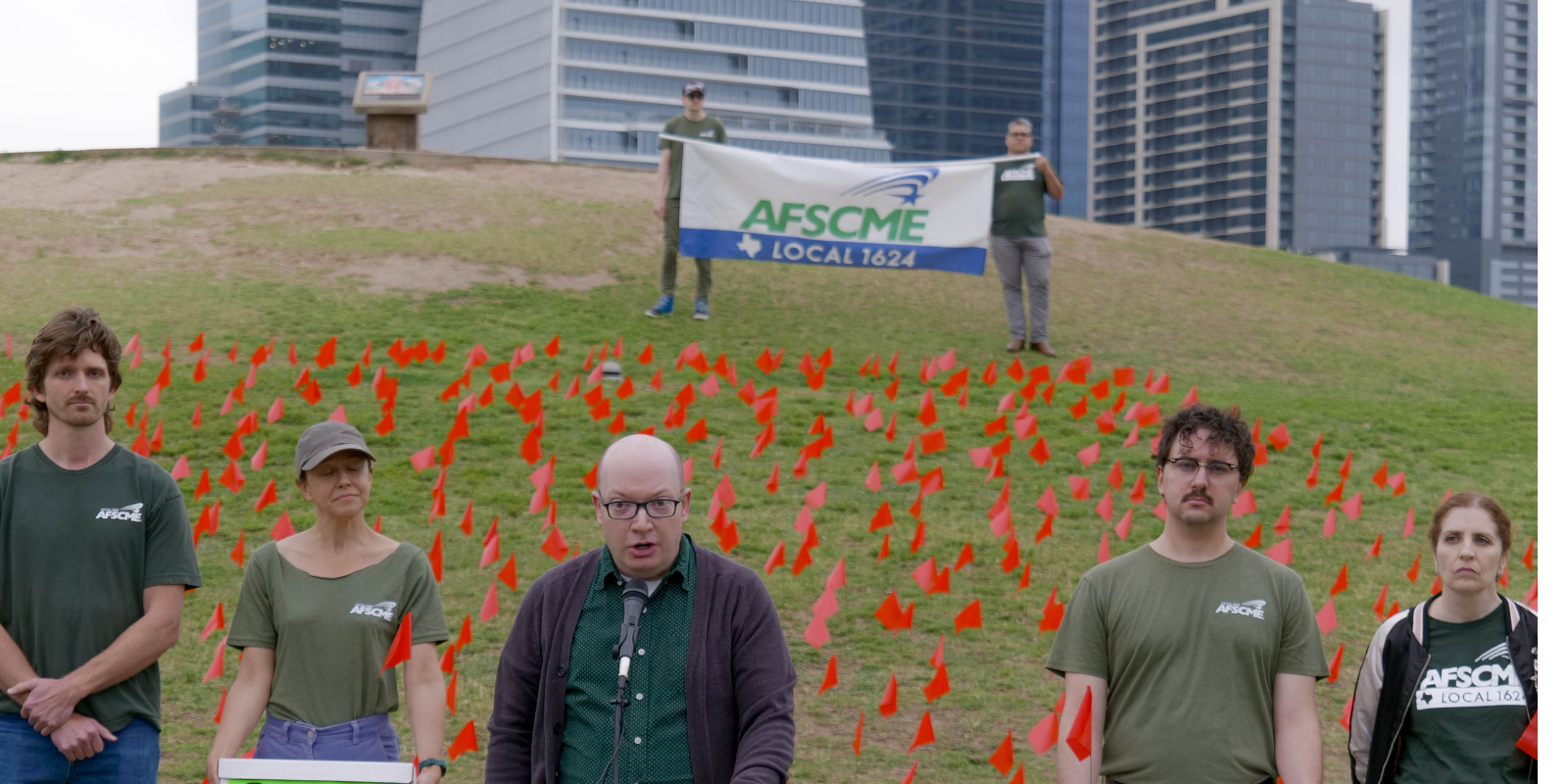
Members of AFSCME Local 1624 who keep Austin’s IT services running learned of the consolidation proposal last November and quickly organized the “Stop One Austin Technology Services” campaign.
Members and campaign leaders are holding one-on-one meetings with city workers and Austin City Council members, collecting hundreds of petition signatures, and demanding real numbers and a real plan.
For city workers like Braniff Davis, a Local 1624 member and a senior geospatial analyst in the Austin Fire Wildfire Division, this consolidation plan poses major risks.
In the halls of Austin’s Fire Department, Davis is more than an IT specialist — he is a vital link in the city’s emergency response chain. Davis provides real-time data and mapping to fire chiefs during a range of emergencies like explosions, fires, and floods.
“In an emergency, I am considered a duty officer. The city has no plan for ensuring public safety personnel are still equally equipped to do their job,” Davis said. “I wouldn’t be on the ground, and I would be working under an IT supervisor with no public safety background.”
Davis was hired by the team for his wildfire specialty — a constant threat in Austin. He is on call in emergencies, but this plan could place an IT ticketing system between him and rapid response.
“If it works within the typical framework of our city’s IT processes, it’s going to make things slower and less efficient. Most importantly, it may cost property and lives,” said Davis.
The local supports finding other ways to help the city save money. Things like consolidating redundant software and hardware have been proposed. But AFSCME members argue that relocating essential officers isn’t a long-term deficit solution — it’s an erosion to the city’s public safety infrastructure.
“I felt like I was screaming into a void. The plan left more questions than answers, and it was moving quickly,” Davis said. “And then my union reached out and gave me the platform to join my colleagues and raise my voice. That power to push back and continue to protect the public has meant everything.”
After AFSCME members met with the city manager, the city made a certain exception for occupational personnel, but further information on who qualifies and what the exceptions are is unclear. AFSCME members in Austin are continuing to get organized and fight for those answers — and use their power in a union to ensure that their community is well served and adequately resourced.